
Usually, yes. A grey corrugated garage or shed roof made of asbestos cement is generally safe to leave where it is if the sheets are sound and nobody is going to disturb them. The fibres are bound into the cement, so a roof in reasonable condition isn’t releasing much while it’s left alone. The answer changes when the sheets are breaking up, when you need to work on the roof, or when your plans for the garage change. Here’s how to decide which of those applies to you.
Asbestos is a problem when fibres get into the air and are breathed in. In asbestos cement, the fibres are locked into a hard cement sheet. That’s why the HSE’s asbestos questions and answers advise that asbestos materials in good condition, and unlikely to be damaged, should be left in place and monitored.
So a roof that’s whole, dry and not being touched is rarely an emergency. The risk comes from what happens to it next.
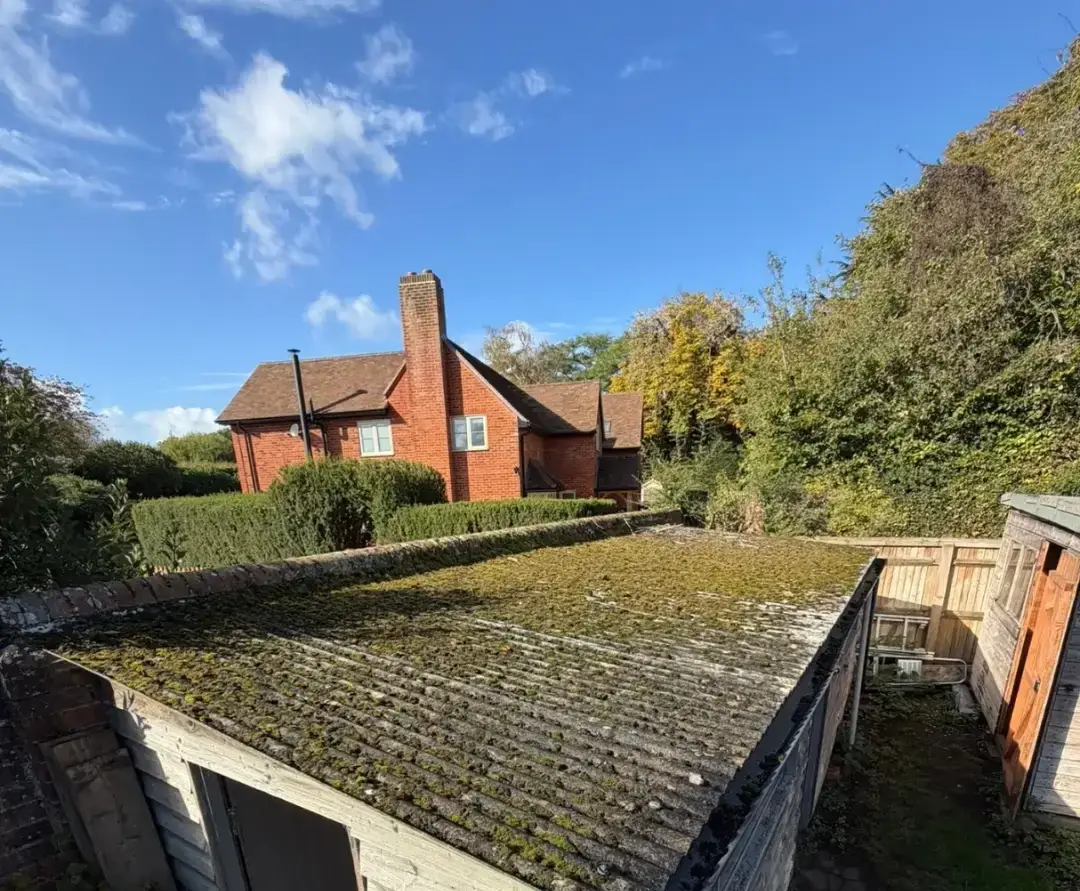
You don’t need to climb up to check it, and please don’t. A walk round with your eyes open will tell you most of what you need. Look for:
Moss and lichen on their own don’t tell you much. Plenty of sound roofs have them. What matters is whether the sheet underneath is still whole.
Yes. This is where a lot of people get caught out. Jet washing, scrubbing, scraping off moss or brushing down a weathered roof all work on the surface of the sheet, and that’s how fibres get released. The HSE publishes separate Asbestos essentials task sheets for cleaning weathered cement roofing and for painting cement products, which tells you these jobs are treated as work on asbestos, with their own controls.
Never pressure wash an asbestos roof. If it needs cleaning, painting or sealing, get advice first.
A roof that’s fine to leave today might not be fine to leave once your plans change:
| What you can see | What you are planning | Our honest call |
|---|---|---|
| Sheets whole, no leaks, nothing loose | Nothing, the garage stays as it is | Leave it and check it from the ground twice a year |
| Some weathering or moss, sheets still whole | Nothing for now | Leave it, don’t clean it, and keep checking |
| Cracks, a leak, or a loose or slipped sheet | Nothing, but it is getting worse | Get it tested and plan removal before it breaks up further |
| Any condition | Cleaning, painting or fixing the roof | Get advice before you start, because this is work on asbestos |
| Any condition | Extending, re-roofing or demolishing | Have it tested and removed before the building work starts |
| Pieces broken off or lying around | Anything | Keep people and pets away, don’t sweep it up, and get advice quickly |
You can’t tell for certain by looking. Grey corrugated sheets on older garages very often contain asbestos, but some later sheets don’t. If you’re weighing up whether to leave the roof or take it off, a sample test settles it. We take a small sample with care and send it to a UKAS-accredited laboratory, so you know exactly what you’re dealing with before you spend anything on removal. You can read how it works on our asbestos testing service page.
One more thing a test will pick up: the roof isn’t always the only asbestos in a garage. Some have board linings, panels or soffits made of a different, higher risk material. Those need a specialist survey and a specialist removal firm, and if that’s what we find, we’ll tell you straight away.
Done properly, a garage roof is a straightforward job. The sheets are wetted, the fixings are undone and the sheets come down whole wherever possible, rather than being broken up. That’s the method set out in HSE task sheet A14 for removing asbestos cement sheets. Sheets that are badly broken up are harder to remove safely and need more precautions, which is another reason to deal with a failing roof before it gets worse.
Our UKATA-trained team wraps the sheets, takes them away as a registered waste carrier and disposes of them at an approved facility, with a consignment note for your records. See our asbestos garage roof removal page for how we work, and our garage roof removal cost guide for what affects the price. If the sheets are already down and wrapped, our asbestos collection service can pick them up.
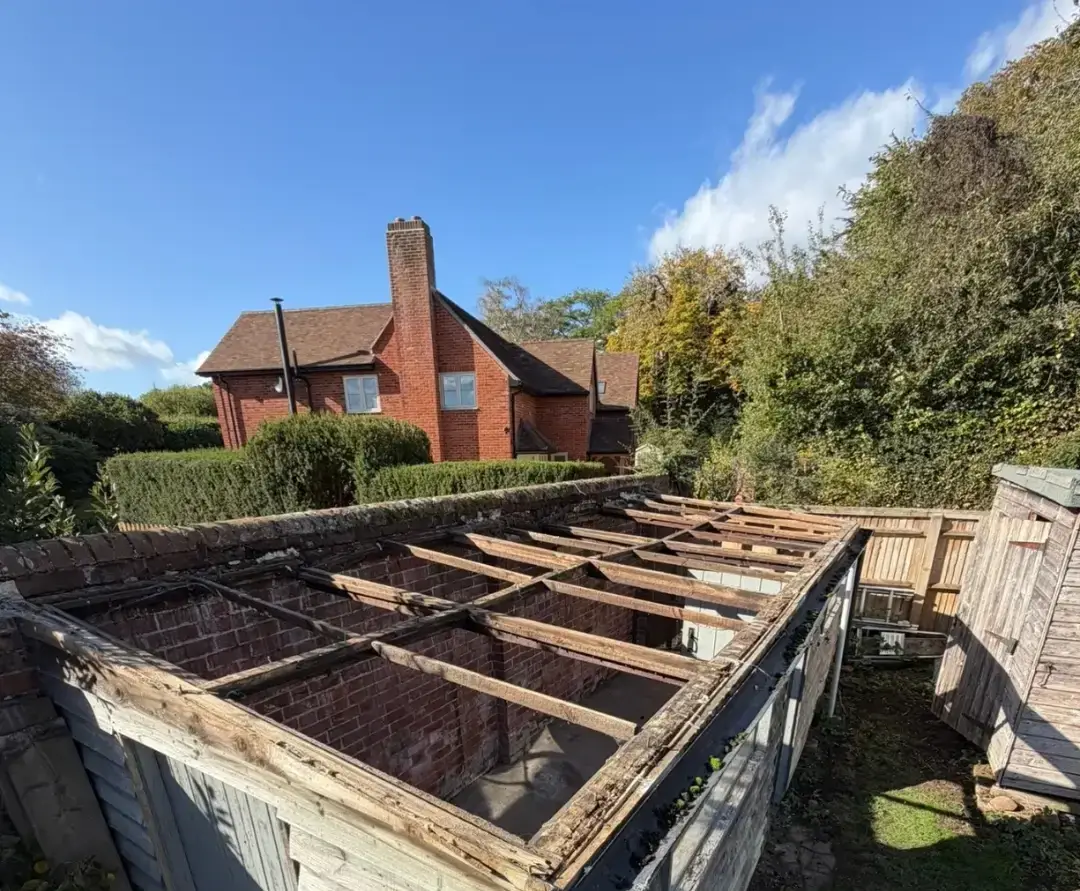
Sometimes. Covering a sound roof with new sheeting can avoid removing it, but fixing the new roof usually means drilling through or into the old sheets, and that is work on asbestos. Get the sheets tested and get advice on the fixing method before anyone starts.
A single crack doesn’t mean fibres are pouring out. It does mean the sheet is starting to fail, and it will get worse with weather. Don’t touch it, keep an eye on it, and plan to get it tested and dealt with rather than waiting for pieces to fall.
Answer honestly if you’re asked. A buyer’s surveyor may well flag a grey corrugated roof anyway, so a test result and, if needed, a removal quote make the conversation simpler for everyone.
Some council recycling sites accept bonded asbestos cement from householders, usually with booking, wrapping and quantity rules. Check with your council before you go, and never break sheets to fit them in a car. If that’s not practical, we can collect them.
If you’re not sure whether your garage roof is asbestos, or whether it’s still in a fit state to leave, start with a test. Book a sample test or send us a couple of photos through our free quote form, and we’ll tell you honestly what we think. We cover towns across Berkshire, Surrey and Hampshire.