
Buying an older home is exciting, but it can come with things a viewing won’t show you. Asbestos is one of them. It was used widely in British homes for decades, and it’s often hidden in ceilings, floors, roofs and boxing-in. Finding out before you exchange, or at least before you start any work, means you can plan and budget properly instead of discovering it halfway through a renovation.
Asbestos fibres can cause serious lung diseases, including mesothelioma, asbestosis and lung cancer, when they’re breathed in. The danger comes from disturbing the material, which releases fibres into the air. That’s why the HSE’s asbestos guidance advises leaving undamaged asbestos alone and dealing with it properly before any work that would disturb it.
For a buyer, the practical question is simple: what’s in the house, what condition is it in, and does it get in the way of what you want to do?
The last types of asbestos were only banned in the UK in 1999, so the cut-off is 2000, not the 1980s. Homes built from the 1950s to the 1980s are the most likely to have it, but extensions, garages and refurbishments from the 1990s can too.
Common places in a house include:
Not on its own. A RICS Home Survey looks at the condition of the property and may flag materials that could contain asbestos, but surveyors don’t take samples. If your survey report mentions possible asbestos, that’s your cue to get those materials tested rather than guess.
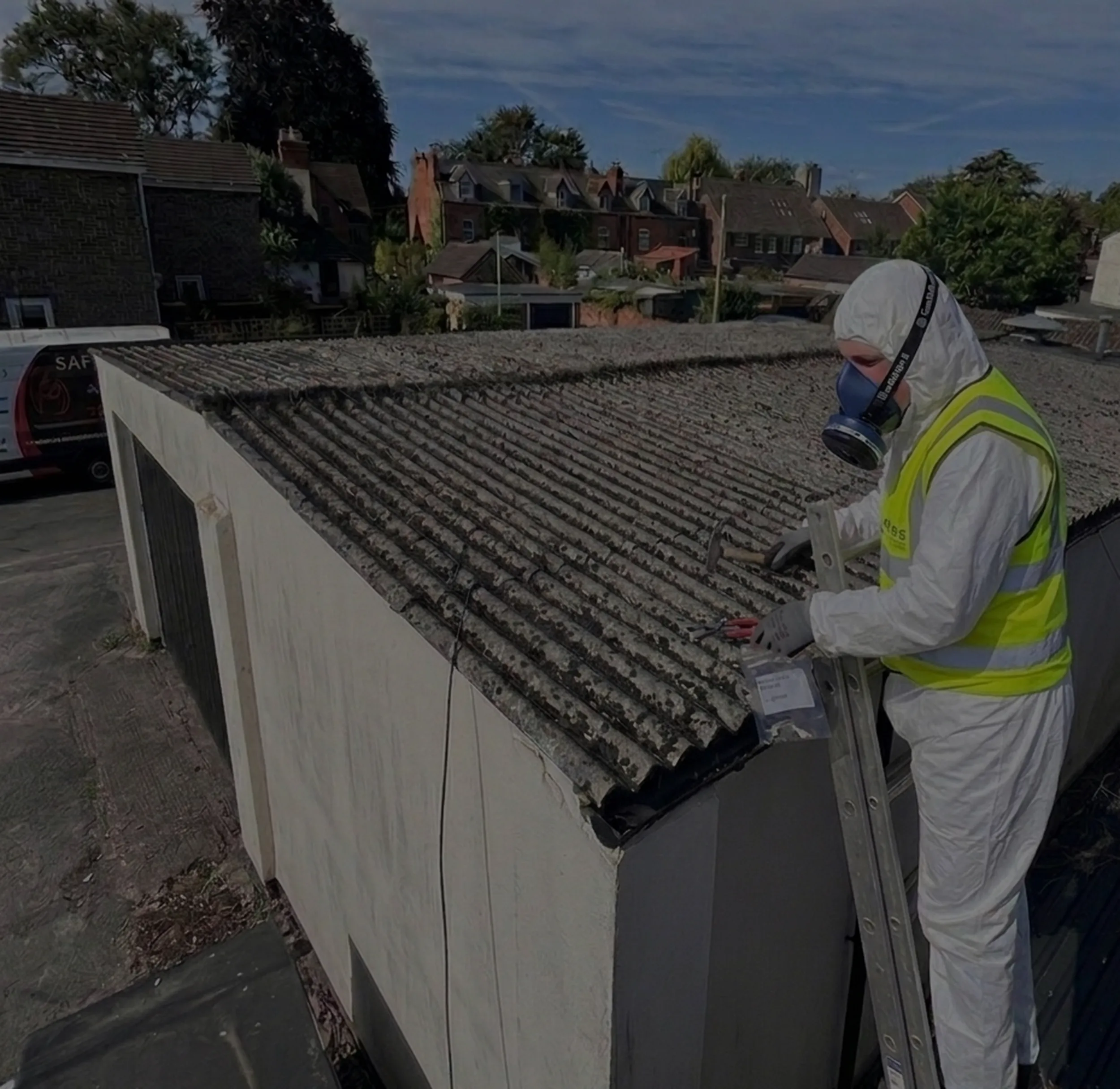
A trained tester takes a small sample from each suspect material, sealing the spot afterwards so nothing is left exposed. The samples go to a lab and the results tell you, material by material, whether asbestos was found and which type. At SafeZone we provide fast, reliable asbestos testing with results typically within 24 to 48 hours.
If a result comes back clear, read our guide on what “no asbestos detected” means. It covers the sample you sent, not the whole house.
Most buyers plan some work: a new kitchen, a knocked-through wall, new flooring or a garage conversion. Those are exactly the jobs that disturb asbestos. Testing first lets you plan the work in the right order, have anything that needs to go removed safely, and avoid builders stopping mid-job.
Until you know, please don’t sand, drill, cut, scrape or jet wash any material you think might contain asbestos.

It’s rarely a reason to walk away. Many materials are low risk if they’re in good condition and left alone. If something is damaged or in the way of your plans, it can be removed. Our asbestos removal service covers common jobs like Artex ceilings, floor tiles and garage roofs, and our cost guides for Artex ceilings and garage roofs help you budget.
Some materials, such as pipe lagging, sprayed coatings, insulating board or anything badly damaged or crumbling, need a specialist survey and a specialist removal firm. If that’s what we find, we’ll tell you straight away.
Yes, with the seller’s permission, since samples are taken from the property. Many buyers arrange it between offer and exchange so the results can inform their plans or negotiation.
Asbestos in good condition that nobody disturbs is generally low risk. The danger comes from damage or from work that breaks it up.
No. Plenty of older homes have none, or only in one or two places such as a garage roof or a ceiling. Testing tells you exactly where it is.
Buying a home in Berkshire, Surrey, Hampshire, Sussex or London? Send us photos of anything you’re unsure about on WhatsApp, or give us a call, and we’ll tell you whether it’s worth testing. You can also use the quote form on this page.
This guide is general information, last updated October 2026. It is not a substitute for testing the specific materials in your property.